Choosing China’s top Vehicle Carpet Cleaner suppliers requires more than comparing factory prices. Product performance, material safety, and service reliability matter equally. A cleaner may look powerful in a laboratory, yet perform poorly on a damp vehicle floor.
Mike Stoops, a longtime automotive detailing educator, has said, “Agitation is the key to cleaning carpets and upholstery.” This practical observation still guides professional testing. Strong suppliers should offer machines with stable spray pressure, effective extraction, adjustable suction, and quick-drying results. Their detergents should handle coffee stains, road dust, oil marks, and unpleasant odors without damaging nylon, polyester, rubber backing, or bonded trim.
A credible supplier should also provide test reports, operating instructions, replacement parts, and responsive technical support. Factory audits can reveal details that websites hide. Look for clean assembly areas, documented quality checks, and consistent sample performance. Certifications help, but they do not replace real testing.
Our comparison will examine Chinese manufacturers across equipment design, cleaning efficiency, noise levels, durability, customization, and after-sales support. It will also consider export experience and communication quality. These factors can prevent expensive surprises after shipment.
The “top” supplier is not always the cheapest. It may be the company that solves problems quickly. Still, no supplier is perfect. Sample tests can miss long-term wear, and advertised recovery times may vary in real workshops. Buyers should test several machines on identical carpets before committing. This guide offers a practical starting point, not a permanent ranking.
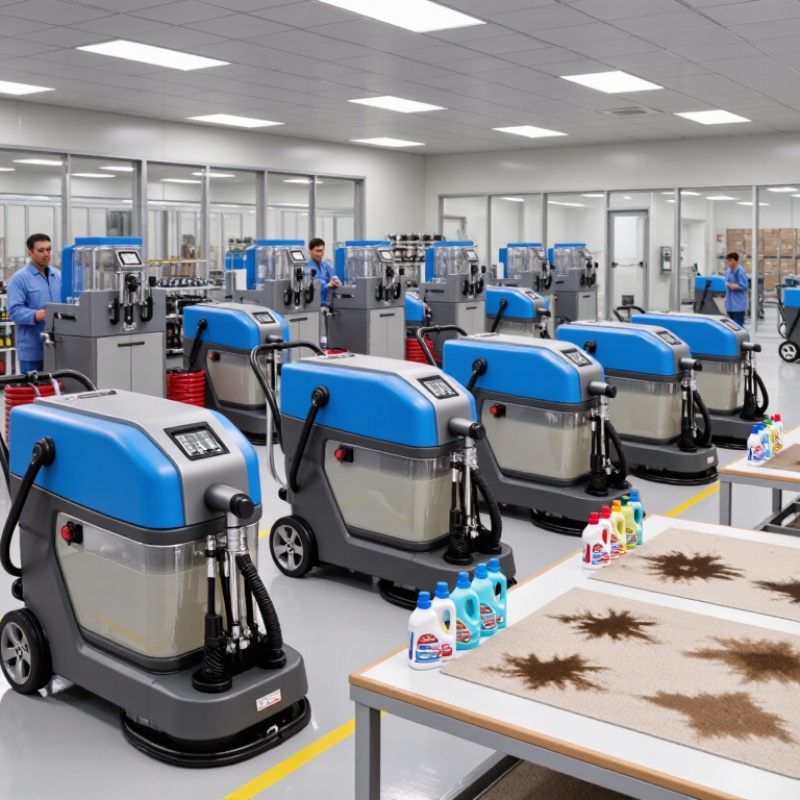
China’s vehicle-care market is expanding with the country’s production capacity. The China Association of Automobile Manufacturers reported 30.16 million vehicles built in 2023. Every vehicle adds potential demand for carpet cleaners, extraction tools, and interior-care equipment. This volume supports a wide supplier base, from specialized factories to integrated vehicle-service manufacturers.
Reliable suppliers should show more than attractive catalog photos. Ask for cleaning tests on fabric mats, rubber-backed carpets, and light-colored upholstery. Check extraction strength, water recovery, noise levels, and replacement-part availability. A practical trial should include muddy footprints, spilled coffee, and dried dust. Small details matter. Operators notice them quickly.
Chemical documentation also deserves careful review. Request ingredient information, safety data, dilution guidance, and fabric-compatibility results. Suppliers with stable quality systems usually provide clearer inspection records and batch tracking. Production capacity matters, but consistency matters more. One excellent sample proves very little. A repeated test across several batches gives better evidence.
The market is large, yet selection is not simple. A cheaper machine may consume more water or leave carpets damp for too long. That creates odor risks and slower service work. I would also question exaggerated cleaning claims. Some suppliers communicate confidently, while their test conditions remain unclear. Honest suppliers explain limits, maintenance needs, and realistic cleaning times. That candor is often more valuable than polished sales language.
When comparing vehicle carpet cleaner suppliers in China, buyers should inspect chemistry before packaging. A near-neutral formula, between pH 6 and 8, is generally gentler on dyed nylon, polyester, backing adhesives, and interior plastics. However, pH alone does not predict cleaning power. A supplier should state whether the value applies to the concentrate or working solution. That distinction is easy to miss.
For routine soil, a practical concentrate may dilute from 1:10 to 1:20 with water. Light maintenance can require 1:30, while greasy footwell soil may need 1:5 after a spot test. Clear instructions matter more than impressive numbers. Nonionic surfactants loosen oily films, while mild builders improve soil suspension. Chelating agents can reduce hard-water interference. Enzymes may help with food or protein residues, but they need suitable time and temperature. Fragrance should never hide incomplete rinsing.
Experienced detailers should test a small carpet corner, then inspect color, texture, and drying speed. Apply, agitate with a soft brush, extract, and check the recovered water. Excess foam can overload equipment and leave residue. Ask suppliers for SDS documents, batch consistency data, and fiber-compatibility results. A reliable manufacturer should explain dilution by sprayer or extractor, not give one vague ratio. I have found that “universal” claims often need more questioning. Even careful testing has limits, especially on old carpets with weakened backing.
Reference guide: Neutral and mildly alkaline vehicle carpet cleaners typically operate within the pH 6–8 range. Dilution ratios vary by soil load, extraction equipment, and formulation concentration, so the product technical data sheet should always take priority.
A reliable supplier ranking should weigh MOQ, production capacity, exports, and ISO 9001 status. Vehicle production reached about 93.5 million units worldwide in 2023, according to OICA. That scale supports steady demand for interior cleaning products. However, suppliers rarely publish audited factory capacity. Buyers should treat monthly output claims as unverified until production records or third-party audits are available.
A practical screening model places suppliers with MOQs below 500 units in the flexible category. Factories producing above 100,000 units monthly may suit distributors and private-label programs. Export experience should include shipment records across at least three regions. ISO 9001 certification also matters, but certification alone does not prove formula performance. The ISO Survey of Management System Certifications 2023 confirms ISO 9001 remains widely adopted worldwide. Still, certificates require scope and validity checks. HS 3402 trade data from UN Comtrade can indicate cleaning-product exports, but it does not isolate vehicle carpet cleaners. This limitation deserves attention.
Tips: Request a current ISO certificate, factory video, batch test, and export references. Compare MOQ by fragrance, packaging, and formula. A low MOQ may hide higher setup costs. Ask for stain-removal testing on nylon, polyester, and automotive carpet samples. Also inspect spray-head leakage after transport testing. Small details often expose weak quality control.
China Top Vehicle Carpet Cleaner Suppliers?
Compliance Review: SDS, GHS Labels, REACH, and VOC Requirements
Selecting a vehicle carpet cleaner supplier requires more than comparing price and packaging. Request a current Safety Data Sheet before approving samples. It should contain all 16 GHS sections, accurate ingredients, hazard classifications, and emergency procedures. Check the revision date carefully. Old documents create avoidable risk.
GHS labels should match the SDS exactly. Look for product identification, pictograms, signal words, hazard statements, precautionary statements, and supplier details. Labels must remain readable after handling and storage. A practical review includes checking spray bottles, cartons, and transport packaging. Small mismatches matter.
REACH compliance needs market-specific evidence. Ask whether substances of very high concern are present above relevant thresholds. Request declarations for restricted substances, not vague promises. VOC rules differ by country, product category, and test method. Obtain laboratory results with sample identity, test date, and method reference. Water-based formulas are not automatically low-VOC.
In supplier audits, traceability is often the weak point. Batch numbers may not connect clearly to test reports. That deserves correction. I would also compare the approved sample with production goods, including odor, drying time, residue, and fabric compatibility. A clean technical file helps, but it does not replace physical inspection. Suppliers should explain changes before shipment, even when the formula seems unchanged.
China Top Vehicle Carpet Cleaner Suppliers?
Supplier verification should begin with usable samples, not polished quotations. Test several production samples on stained vehicle carpets, including dark fabric and older mats. Check cleaning strength, drying time, scent, residue, and color change after 24 hours. A clean-looking sample may still leave a sticky film. That detail is easy to miss.
Ask an independent laboratory to test pH, stability, heavy metals, and restricted substances where applicable. Request the formula’s safety documentation and batch consistency records. Factory audits should examine raw material storage, filling equipment, quality checkpoints, worker protection, and wastewater procedures. Photos are useful, but they cannot replace an onsite or qualified third-party audit. Audit reports can also become outdated.
Tips: Compare total landed cost, not only the unit price. Include sample fees, laboratory testing, packaging, freight, customs charges, inspection costs, and possible rejected batches. A cheaper cleaner may require stronger dilution control or create more returns. Ask suppliers for production lead times and corrective-action records. Some factories answer quickly but provide vague evidence. That is a warning, though not proof of poor quality. Keep written specifications, approved samples, and test results in one file. Small gaps can become expensive later.
| Verification Dimension | Evidence to Request | Practical Acceptance Benchmark | Indicative Time | Indicative Cost (USD) | Risk Level |
|---|---|---|---|---|---|
| Business identity and export capability | Business license, registered address, export records, product catalogue, and current SDS files | Legal entity details match contracts, invoices, bank account, and shipping documents | 2–5 working days | 0–150 | Medium |
| Product sample verification | Sealed samples, batch number, formula or ingredient declaration, dilution instructions, and packaging specification | Sample performance, colour, odour, viscosity, packaging, and label information match the quotation | 7–14 days | 30–250 | Medium |
| Cleaning performance test | Controlled tests on fabric swatches with soil such as coffee, oil, mud, and food residue | Use identical fabric, soil load, dilution, dwell time, agitation, extraction, and drying conditions for every sample | 3–7 days | 50–300 | Medium |
| pH and material compatibility | Independent pH measurement and compatibility checks on nylon, polyester, polypropylene, rubber, and coated surfaces | Many general-purpose textile cleaners are mildly acidic to mildly alkaline; the final target must be confirmed for the intended formulation and substrate | 5–10 working days | 100–500 | Medium |
| Safety and regulatory documentation | Safety Data Sheet, ingredient or allergen information where applicable, transport classification, and market-specific label draft | SDS follows the 16-section GHS format; hazard statements and precautionary statements are consistent with the product composition | 5–15 working days | 100–800 | High |
| Laboratory testing | Third-party report covering pH, appearance, odour, density, microbiological quality where relevant, and restricted substances required by the destination market | Test report identifies the tested sample, batch, test methods, laboratory, date, and pass/fail conclusion | 7–20 working days | 300–1,500 | High |
| Factory audit | On-site or remote audit covering raw-material control, batching, filling, traceability, calibration, warehouse control, and corrective actions | Critical nonconformities closed before production; batch records and retained samples are available for review | 5–10 working days | 250–1,200 | High |
| Quality control and consistency | Incoming inspection records, in-process checks, finished-goods specification, retain-sample policy, and complaint procedure | Each batch has a lot number, release record, defined specification limits, and traceable raw-material records | 3–7 working days | Included in audit | Medium |
| Packaging and transport readiness | Container specification, closure test, leakage inspection, carton drop-test record, pallet plan, and dangerous-goods review where applicable | Packaging remains intact after handling; net weight, gross weight, carton dimensions, and shipping marks are confirmed before booking | 3–10 working days | 50–400 | Medium |
| Minimum order and production capacity | MOQ, monthly capacity, production lead time, filling-line capacity, peak-season plan, and backup raw-material sources | Capacity and lead time are supported by production records rather than verbal estimates; purchase-order terms are written into the contract | 2–5 working days | 0–200 | Medium |
| Total landed cost | Product price, packaging, tooling or label setup, inspection, inland freight, export charges, ocean or air freight, insurance, duties, taxes, and destination delivery | Compare suppliers using the same Incoterm, pack size, order quantity, currency, destination, and duty assumption | 2–7 working days | Quotation-dependent | High |
| Pre-shipment inspection and approval | Final-production photos, random quantity check, label verification, packaging inspection, and retained approval sample | Inspection is completed before balance payment or release of shipping documents; deviations require written approval | 1–3 working days | 150–600 | Medium |
China produced 30.16 million vehicles in 2023. Each vehicle creates demand for interior cleaning. This includes fabric mats, rubber-backed carpets, and upholstery. The market is large, but supplier quality varies.
Request tests using muddy footprints, spilled coffee, and dried dust. Test fabric mats, rubber-backed carpets, and light-colored upholstery. Check cleaning results, extraction strength, water recovery, and drying time. Small details become obvious during daily service.
Use identical carpet samples and equal soil quantities. Measure water consumption, noise, recovery speed, and remaining moisture. A cheaper machine may leave carpets damp for hours. That can slow operations and create odor concerns. I would not trust one impressive demonstration.
A working formula between pH 6 and 8 is generally gentler. It may suit dyed nylon, polyester, adhesives, and interior plastics. However, pH alone does not prove cleaning performance. Ask whether the value applies to concentrate or diluted solution. That detail is easy to miss.
Routine cleaning may use dilution around 1:10 to 1:20. Light maintenance may require approximately 1:30. Greasy footwell soil may need about 1:5 after spot testing. Suppliers should explain ratios for sprayers and extractors. One vague ratio is not enough.
Ask for ingredient information, safety data, and fabric-compatibility results. Nonionic surfactants can help loosen oily films. Mild builders may improve soil suspension. Enzymes can assist with food or protein residues. Excess fragrance may hide incomplete rinsing.
Request a current Safety Data Sheet before approving samples. It should contain all 16 GHS sections and accurate hazard information. Check revision dates carefully. Labels should match the safety document exactly. Also review restricted-substance declarations and market-specific VOC test reports.
Compare samples from several production batches. Check color, odor, residue, drying time, and fabric compatibility. Connect batch numbers with inspection and laboratory records. Physical inspection still matters. I sometimes overvalue clean paperwork, and that deserves correction.
Be careful with unclear test conditions and exaggerated cleaning claims. Ask how much water remains after extraction. Question universal compatibility claims, especially for old carpets. Request maintenance guidance and replacement-part information. Honest limits are useful.
China’s vehicle-care market continues to expand, supported by the production of approximately 30.16 million vehicles in 2023, according to CAAM. This growth has increased demand for reliable Vehicle Carpet Cleaner products suitable for workshops, detailing centers, fleet operators, and everyday vehicle maintenance. Buyers should compare cleaner types by pH, recommended dilution ratios, stain-removal performance, drying behavior, odor control, and active chemistry to ensure effective cleaning without damaging carpets, upholstery, or interior materials.
When evaluating Chinese suppliers, purchasers should review minimum order quantities, production capacity, export experience, quality systems, and ISO 9001 certification. Compliance documents are equally important, including current SDS files, GHS-compliant labels, REACH-related information where applicable, and VOC data required by the target market. Before placing an order, buyers should request samples, conduct laboratory and performance tests, verify packaging and documentation, and consider a factory audit. A complete total-cost assessment should include product price, dilution efficiency, shipping, testing, quality control, and after-sales support.

ClanZhao New Material