China’s Hand Held Carpet Steam Cleaner industry is moving from basic household appliances toward compact, targeted cleaning equipment. Grand View Research identifies rising demand for convenient floor-care products, supported by smaller homes, busy lifestyles, and greater hygiene awareness. Fortune Business Insights also reports steady growth in the global steam cleaner market, although product categories and regional definitions vary.
A Hand Held Carpet Steam Cleaner can remove surface soil, loosen greasy marks, and refresh carpet fibers with heated moisture. It is useful beside sofas, stairs, vehicle interiors, and narrow corners. Not magic. Excessive water can damage backing or encourage slow drying. The right temperature, attachment, and drying time matter greatly.
Stephen Ashkin, a recognized cleaning-industry sustainability expert, has often emphasized, “Cleaning is a process, not a product.” That principle applies to Chinese manufacturers. Buyers should examine heating stability, water-tank design, cord safety, noise levels, testing records, and after-sales support. Reports from the International Trade Centre show China’s strength in appliance manufacturing and export supply chains, but factory capability differs widely. A polished catalog proves little.
This guide introduces China’s leading Hand Held Carpet Steam Cleaner manufacturers through a practical, evidence-aware lens. It considers production experience, engineering control, certifications, customization, and export reliability. The market is promising. Some claims still need verification. Real performance should be judged on measured steam output, drying results, and long-term use—not attractive packaging alone.
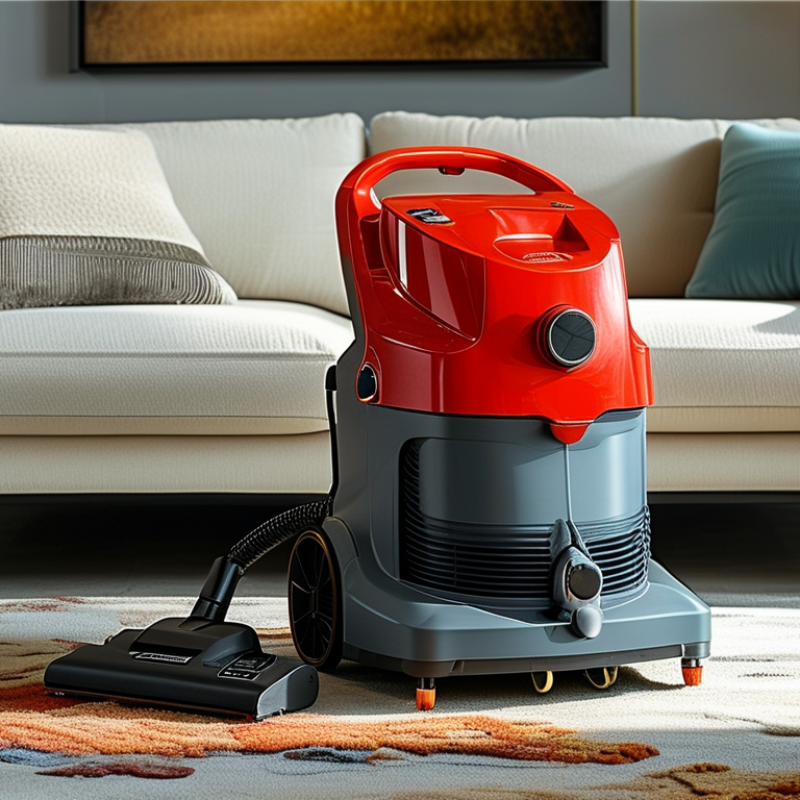
China’s handheld carpet steam cleaner manufacturing landscape is shaped by dense appliance supply chains, export experience, and rapid product iteration. Grand View Research valued the global steam cleaner market at approximately USD 3.2 billion in 2023, with household cleaning demand supporting continued growth. Mordor Intelligence also identifies Asia-Pacific as a major regional market, although its category boundaries differ. The figures are useful, but not perfectly comparable.
Manufacturers commonly source heating elements, pumps, hoses, molded shells, and electronic controls from nearby industrial clusters. This shortens development cycles and simplifies replacement-part management. A practical factory assessment should examine steam output stability, tank leakage, cord safety, thermal cut-off performance, and carpet-surface testing. Small details matter. A weak hose joint can damage user confidence.
Production quality varies between facilities. Some factories maintain documented incoming inspection and batch traceability, while others still rely heavily on final inspection. That is a weakness worth acknowledging. ISO 9001-based procedures can improve consistency, but certification alone does not prove reliable cleaning performance. Buyers should request test records, sample-based audits, and evidence of compliance with destination-market electrical requirements. Reports from Research and Markets forecast continued expansion in steam-cleaning equipment, yet demand does not remove the need for careful validation. The strongest Chinese suppliers combine engineering experience with measurable process control, rather than depending only on low pricing.
| Data Dimension | Representative Data | Manufacturing Landscape Interpretation |
|---|---|---|
| Primary product format | Corded handheld steam cleaner with hose, nozzle, brush, and fabric or carpet attachment | The category is mainly designed for spot cleaning, upholstery, stairs, vehicle interiors, and small carpeted areas rather than whole-room carpet extraction. |
| Electrical input | Common export versions: 220–240 V, 50 Hz; North American versions: 100–127 V, 60 Hz | Manufacturers generally configure heating elements, plugs, wiring, labeling, and certification documentation for the target market. |
| Rated power | Approximately 800–1,500 W for handheld household models | Higher wattage generally supports faster heating and stronger steam output, but increases current demand, thermal-management requirements, and energy consumption. |
| Water-tank capacity | Approximately 0.20–0.50 L | Compact tanks improve portability, while larger tanks extend operation time but add weight and may lengthen heat-up time. |
| Heat-up time | Typically about 2–5 minutes, depending on tank size and heating power | Fast heat-up is commonly achieved through compact aluminum or stainless-steel heating chambers and optimized thermal insulation. |
| Continuous steam duration | Approximately 8–20 minutes per fill under typical household use | Actual duration varies with trigger usage, steam setting, water quality, and the design of the boiler or heating chamber. |
| Steam pressure specification | Common advertised range: approximately 2.5–4.5 bar; specifications should identify whether pressure is maximum or working pressure | Pressure claims are not always directly comparable. Buyers should request test conditions, pressure location, and safety-valve settings. |
| Product weight | Approximately 1.3–3.0 kg excluding packaging and accessories | Weight is influenced by tank volume, heating system, cord length, housing structure, and the number of included attachments. |
| Typical cord length | Approximately 3–5 m | Longer cords improve reach for stairs and vehicle interiors but require additional strain relief, cable storage, and packaging space. |
| Common housing materials | Heat-resistant PP, ABS, PC/ABS, silicone seals, and stainless steel or aluminum heating components | Material selection focuses on heat resistance, electrical insulation, impact strength, chemical resistance, and injection-molding efficiency. |
| Common accessory configuration | Approximately 5–12 accessories, such as floor or carpet heads, nylon brushes, grout brushes, squeegees, extension tubes, and measuring cups | Accessory bundles are frequently customized for different retail channels and applications without changing the core steam unit. |
| Carpet-cleaning suitability | Suitable for spot treatment, surface sanitation, odor reduction, and loosening light soil; not a replacement for a water-extraction carpet machine | Product descriptions should clearly distinguish steam treatment from deep extraction to avoid misleading performance expectations. |
| Core production processes | Plastic injection molding, heating-element assembly, wiring and PCB assembly, ultrasonic or mechanical housing assembly, leak testing, and functional testing | China’s manufacturing ecosystem supports integrated sourcing of molded parts, electrical components, packaging, tooling, and final assembly. |
| Key quality-control checks | Electrical safety, grounding or insulation, steam leakage, pressure release, temperature control, switch operation, cord strain relief, and visual inspection | Reliable suppliers normally combine incoming-material inspection, in-process checks, end-of-line testing, and sample aging or endurance tests. |
| Relevant safety framework | IEC 60335-1 and applicable appliance-specific requirements; China-market products may also require applicable GB standards and CCC assessment | The exact standard set depends on destination, product construction, voltage, plug type, and whether the unit includes electronic controls or pressurized features. |
| Export compliance commonly requested | CE for applicable European requirements, UKCA where applicable, RoHS documentation, EMC testing, and destination-market electrical safety reports | Compliance should be verified against the exact model, factory, voltage version, components, and current destination-country requirements. |
| Customization options | Housing color, logo placement, packaging, plug type, cord length, accessory kit, manuals, labels, and selected heating or control components | OEM and ODM capability is common, but tooling ownership, certification impact, minimum order quantity, and lead time should be agreed in writing. |
| Typical packaging approach | Color retail box or neutral export carton with molded pulp, paperboard, or foam protection | Packaging specifications commonly change according to e-commerce drop-test needs, pallet configuration, shipping route, and sustainability requirements. |
| Main sourcing advantages in China | Dense component supply chain, mature plastic-molding capacity, broad electrical-component availability, flexible packaging, and established export logistics | These advantages can support cost-efficient product variation and shorter development cycles, subject to supplier capability and quality controls. |
| Important buyer verification points | Factory audit, production-line video or inspection, model-specific test reports, bill of materials, leakage test records, spare-parts policy, and warranty terms | Verification is essential because advertised specifications, certification scope, and actual mass-production configuration may differ between models or production runs. |
Check heating elements, water tanks, hoses, seals, cords, and electronic controls. Test steam stability, leakage, insulation, and overheat protection. Small defects matter.
Verify the legal entity, production address, export history, and manufacturing scope. Request a live video tour of molding, assembly, testing, and packaging areas. Photos are not enough.
Test heating time, steam consistency, tank leakage, cable strain, noise, and accessory fit. Also inspect carpet surfaces after repeated use. One sample can mislead.
Request current conformity documents, test reports, model numbers, batch records, and safety-test evidence. Check that documents match the exact product configuration. Logos alone prove little.
Request samples from two production batches. Compare heat-up time, steam output, tank seals, hose joints, and packaging quality. Differences may reveal process weakness.
Define heat-up time, tank capacity, pressure, voltage, plug type, warranty response, and defect limits. Include carton strength and spare-part requirements. Write everything down.
The final cost may include tooling, spare parts, inspections, shipping, and replacement handling. A low quotation can hide important expenses. Cheap is not always cheaper.
Use written specifications, pre-shipment inspections, random sampling, and regular communication. Check pallet protection, carton performance, and plug details. No checklist is perfect.
China has developed a strong manufacturing base for Hand Held Carpet Steam Cleaner products, supported by experienced suppliers, integrated component sourcing, and efficient production systems. Manufacturers typically focus on compact designs, rapid steam generation, adjustable controls, practical attachments, water-saving performance, and safety features such as thermal protection and automatic shutoff. These cleaners are designed for convenient household and commercial use, with attention to durability, ease of maintenance, and consistent cleaning results.
Production commonly includes product design, mold development, electronic assembly, heating-system installation, testing, and final quality inspection. When evaluating a Chinese manufacturer, buyers should review product specifications, factory capabilities, quality-control procedures, certifications, production capacity, customization support, packaging standards, and export experience. A reliable supplier should provide clear technical documentation, stable communication, transparent sampling processes, and dependable after-sales support to help ensure consistent product quality and smooth international cooperation.

 ClanZhao New Material