Choosing a commercial carpet extractor is rarely as simple as comparing suction ratings. Global buyers face different voltage systems, plug standards, water restrictions, freight costs, and service networks. A powerful machine can still disappoint when replacement parts take weeks to arrive. That practical gap matters.
Market research supports this demand for better cleaning equipment. Grand View Research’s Carpet Cleaning Products Market report describes steady global growth, driven by hygiene awareness, commercial maintenance, and professional service adoption. Fortune Business Insights also identifies commercial and institutional cleaning as important market segments. These reports show opportunity, but they do not choose the right machine for every building.
That is where a careful comparison of seven Mytee Carpet Cleaner models becomes useful. Mytee’s portable extractors, heated units, upholstery tools, and larger systems serve different working conditions. A hotel corridor needs mobility and fast recovery. A vehicle-detailing shop may value compact tanks and delicate-tool control. A restoration contractor may prioritize heat, vacuum strength, and continuous operation.
Small details become expensive.
This guide evaluates practical specifications, including lift performance, solution capacity, heating systems, cord design, noise, weight, and maintenance access. It also considers international purchasing concerns, such as voltage compatibility, warranty coverage, customs handling, and regional technical support. The assessment follows professional cleaning principles referenced by the Institute of Inspection Cleaning and Restoration Certification, including its S100 cleaning and restoration standard.
No ranking is flawless. Manufacturer claims still require context. Real-world results depend on fiber type, soil level, operator training, and drying conditions. For that reason, these seven options are compared with both technical evidence and hands-on buying realities, helping global purchasers make a more defensible decision.
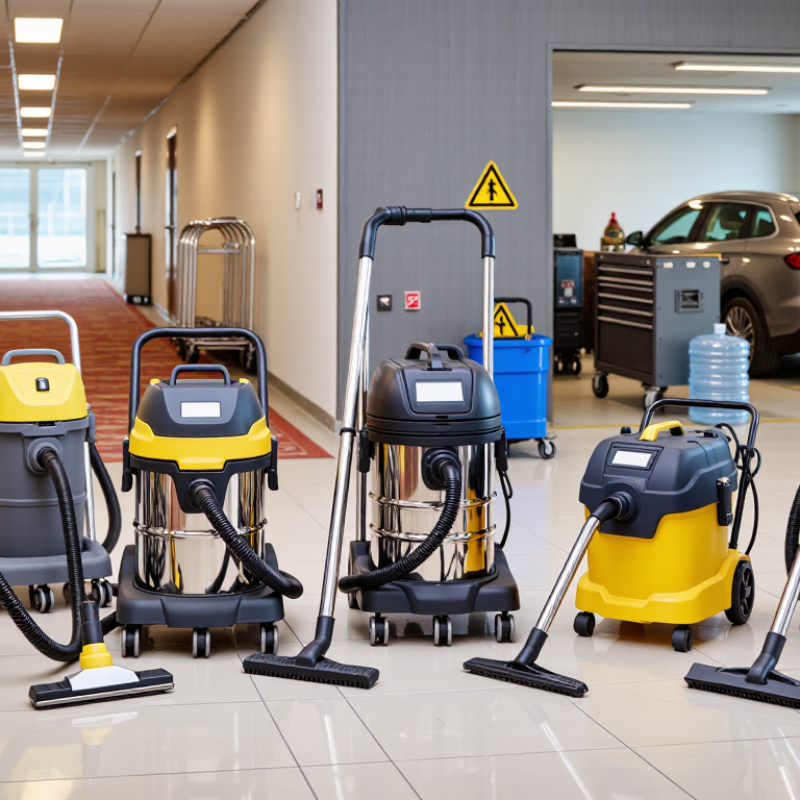
A Mytee carpet cleaner is best understood as a portable hot-water extraction machine. It sprays heated solution into carpet fibers, loosens soil, then removes moisture through a powerful vacuum system. Its main parts include a solution tank, recovery tank, pump, heater, hose, and floor wand. In field use, technicians often judge recovery performance more carefully than advertised wattage. Wet carpet, slow drying, and repeated passes can expose weak equipment quickly.
Grand View Research’s 2024 market analysis indicates steady growth in carpet-cleaning equipment and chemical demand, supported by residential and commercial maintenance. The U.S. Environmental Protection Agency reports that indoor pollutant levels can be two to five times higher than outdoor levels. Regular extraction can therefore support cleaner interiors, although it cannot replace ventilation or source control. These machines suit homes, hotels, offices, schools, vehicles, and small restoration jobs. Low-moisture upholstery work is also possible with suitable tools. Healthcare settings require stricter chemical, drying, and hygiene procedures. Bigger is not always better. A compact extractor may work better in narrow corridors, while larger tanks reduce refilling during hotel projects. One practical weakness remains: operators may over-wet carpet while chasing visible stains. Training, measured solution use, and careful drying still matter more than impressive specifications.
Comparing seven carpet cleaner models requires more than checking suction power. Grand View Research valued the global carpet cleaning products market at about USD 1.4 billion in 2023, showing strong demand for practical equipment. For global buyers, compare recovery capacity, heating speed, cord length, voltage, and service access. A compact portable model suits apartments and vehicles. A larger dual-vacuum unit works better in hotels and offices. Heated models can loosen oily soil, but they may consume more electricity.
The Carpet and Rug Institute generally recommends professional carpet cleaning every 12 to 18 months. That interval makes drying time important. Look for measurable airflow, sealed recovery tanks, and adjustable pressure. A 2-inch vacuum hose is often easier to maintain than a narrow hose. Check noise ratings, too. A powerful machine can still be unsuitable for occupied offices. My own comparison would not rank suction alone; real performance changes with carpet density, humidity, and operator technique. That part is easy to overlook.
Tips: Request test data before importing. Confirm 110V or 220V compatibility, plug type, warranty coverage, and replacement-part availability. Ask whether the model has recognized electrical safety certification for your destination. Measure the doorway and storage space first. Small details matter. A machine that cleans quickly but dries slowly may create callbacks. For fair testing, use the same carpet area, detergent dilution, soil load, and drying conditions across all seven models. Results may still vary.
For global buyers, the seven best carpet cleaners should be judged by practical specifications, not appearance alone. Residential machines usually need compact bodies, simple controls, and solution tanks of 1 to 3 gallons. A recovery tank with a clear lid helps users notice dirty water before overflow. Keep it visible.
Commercial cleaning demands more endurance. Look for a pump rated around 100 to 1,200 PSI, depending on carpet type and cleaning method. Strong water lift supports deeper extraction, while higher airflow can shorten drying time. These figures should be tested together, because one impressive number rarely proves real performance. A 25 to 50 foot hose can improve access in hotels, offices, and large homes. Swivel casters also reduce strain across long corridors.
Weight matters more than many product sheets admit. A powerful unit may become difficult on stairs or inside small vehicles. Noise ratings below 70 decibels are useful for occupied buildings, but manufacturers may measure sound under different conditions. Buyers should request test methods, electrical requirements, plug types, warranty terms, and replacement-part availability for their region. Heat-assisted cleaning can improve results on greasy soil, yet it may increase energy use and maintenance. In my experience, simple machines often survive longer because operators make fewer mistakes. Still, this is not universal. Check recovery performance on the actual carpet, not only on showroom samples.
| Cleaner | Recommended Use | Solution Tank | Recovery Tank | Pump Pressure | Vacuum Lift | Cleaning Path | Power Supply | Dimensions | Approx. Weight | Key Functional Features |
|---|---|---|---|---|---|---|---|---|---|---|
| Cleaner 01 | Residential rooms, stairs, and spot cleaning | 3 gal / 11.4 L | 3 gal / 11.4 L | 100 psi | 100 in. water lift | 10 in. hand-tool width | 120 V, 10.8 A | 20 × 14 × 33 in. / 51 × 36 × 84 cm | 31 lb / 14 kg | Compact portable body, heated solution option, manual hose connection, suitable for upholstery and small carpeted areas. |
| Cleaner 02 | Homes, apartments, and light janitorial work | 4 gal / 15.1 L | 4 gal / 15.1 L | 120 psi | 120 in. water lift | 10 in. hand-tool width | 120 V, 12 A | 22 × 16 × 35 in. / 56 × 41 × 89 cm | 38 lb / 17.2 kg | Balanced tank capacity, dual-stage vacuum motor, carrying handles, and improved recovery performance for routine cleaning. |
| Cleaner 03 | Residential deep cleaning and vehicle interiors | 5 gal / 18.9 L | 5 gal / 18.9 L | 120 psi | 137 in. water lift | 12 in. hand-tool width | 120 V, 12.5 A | 24 × 17 × 36 in. / 61 × 43 × 91 cm | 44 lb / 20 kg | Large-capacity portable design, high-recovery vacuum system, flexible hose assembly, and tools for fabric surfaces. |
| Cleaner 04 | Commercial offices, hotels, and retail spaces | 6 gal / 22.7 L | 6 gal / 22.7 L | 500 psi adjustable | 137 in. water lift | 12 in. hand-tool width | 120 V, 15 A | 27 × 20 × 36 in. / 69 × 51 × 91 cm | 65 lb / 29.5 kg | Adjustable pressure control, stainless-steel solution fittings, commercial-duty vacuum motor, and extended hose compatibility. |
| Cleaner 05 | Professional carpet technicians and recurring contracts | 10 gal / 37.9 L | 10 gal / 37.9 L | 1,200 psi maximum | 200 in. water lift | 12 in. wand or upholstery-tool configuration | 120 V, 15 A | 34 × 22 × 42 in. / 86 × 56 × 107 cm | 110 lb / 49.9 kg | High-pressure extraction system, dual three-stage vacuum motors, large tanks, and a wheeled frame for job-site movement. |
| Cleaner 06 | Large commercial facilities and intensive extraction | 12 gal / 45.4 L | 12 gal / 45.4 L | 1,200 psi maximum | 200 in. water lift | 14 in. wand configuration | 230 V, 13 A | 39 × 25 × 44 in. / 99 × 64 × 112 cm | 145 lb / 65.8 kg | High-capacity tanks, heavy-duty pressure pump, powerful vacuum system, and a reinforced transport chassis. |
| Cleaner 07 | Global rental fleets, contractors, and high-volume cleaning | 13 gal / 49.2 L | 13 gal / 49.2 L | 1,200 psi maximum | 200 in. water lift | 14 in. wand configuration | 230 V, 15 A | 42 × 27 × 46 in. / 107 × 69 × 117 cm | 165 lb / 74.8 kg | High-volume extraction capacity, commercial-grade pump and vacuum motors, durable frame, and serviceable internal components. |
For global buyers, carpet-cleaning equipment must match the local electrical system before price becomes the deciding factor. Many markets use 220–240 volts at 50 hertz, while others use 100–120 volts at 60 hertz. Check the rating plate, plug type, motor frequency, and required circuit amperage. A plug adapter is not a voltage converter. That distinction prevents overheating, weak suction, and unsafe operation. I have seen buyers overlook frequency compatibility. It is an expensive mistake.
Shipping also needs practical scrutiny. UNCTAD’s Review of Maritime Transport 2023 reports that ships carry over 80% of global merchandise trade by volume. That scale does not guarantee smooth delivery. The World Bank’s Logistics Performance Index 2023 evaluates 139 economies through customs, infrastructure, tracking, and timeliness. Ask for carton dimensions, gross weight, spare-part availability, and damage procedures. Warranty terms should state coverage duration, labor limits, return freight responsibility, and approved service locations. Remote buyers need written support response times, not vague promises. Support quality can matter more than a small discount. Still, published warranty language may not reflect real service speed. Verify it with two recent customers, and keep every invoice and serial record.
Selecting the right carpet cleaner for a global market requires more than comparing motor power. According to Grand View Research, the global commercial cleaning services market reached US$415.93 billion in 2023. That scale increases demand for fast, reliable equipment. However, regional conditions can change the decision completely.
Check voltage, plug standards, water temperature limits, and local electrical approvals before purchasing. A machine designed for 120 volts may fail in a 230-volt market. Recovery performance also matters. In a busy hotel corridor, a larger recovery tank reduces dumping stops, while a compact unit suits narrow offices. I have found that advertised tank capacity can mislead. Actual recovery often drops when hoses are long or filters become blocked.
Labor efficiency deserves close attention. The U.S. Bureau of Labor Statistics projects 7% employment growth for janitors and building cleaners between 2022 and 2032. Fewer interruptions can protect operating margins. Compare extraction speed, drying time, handle comfort, noise, and access to replacement pumps. Local service support is essential, especially where shipping may take weeks. Ask for maintenance manuals and parts availability in writing. A lower purchase price is not always economical. In some markets, stronger suction matters less than simple repairs and dependable after-sales training. That's easy to overlook.
Electrical compatibility is a key factor when selecting a commercial carpet cleaner for international distribution. The chart shows common nominal single-phase supply voltages; buyers should confirm local electrical codes, plug types, circuit capacity, and 50/60 Hz frequency before purchase. Source reference: IEC-based international voltage conventions.
Compare suction, airflow, recovery capacity, heating speed, hose length, voltage, and service access. Appearance proves little. Test data matters more.
A compact portable model usually works best. Choose solution and recovery tanks between 1 and 3 gallons. Measure storage space first.
A larger dual-vacuum unit can handle wider areas and longer cleaning sessions. A 25-to-50-foot hose improves corridor access. Weight still matters.
Pump pressure may range from about 100 to 1,200 PSI. The suitable level depends on carpet type and cleaning method. Higher pressure alone proves little.
Heat can loosen oily soil and improve cleaning results. It may also increase electricity use and maintenance needs. Not always better.
Choose strong airflow, effective water recovery, and adjustable pressure. Check drying under realistic humidity conditions. Fast cleaning can still dry slowly.
Confirm 110V or 220V compatibility, plug type, electrical safety certification, and regional warranty coverage. Ask about replacement parts. Small details matter.
Use the same carpet area, detergent dilution, soil load, and drying conditions. Record recovery performance and drying time. Results may still vary.
Noise below 70 decibels can be useful in occupied buildings. Manufacturers may use different testing methods. Request the measurement conditions.
Not necessarily. Heavy equipment may struggle on stairs or inside vehicles. Simple machines can last longer because operators make fewer mistakes. This is not universal.
Choosing the right Mytee Carpet Cleaner requires more than comparing price or appearance. This guide explains what defines this type of carpet-cleaning equipment and how it supports residential, hospitality, automotive, office, and commercial cleaning tasks. It reviews seven leading model categories by examining key specifications such as vacuum strength, solution capacity, heating performance, portability, recovery efficiency, hose compatibility, and overall durability. These factors help buyers match equipment to the size, frequency, and intensity of their cleaning work.
For international purchasers, the selection process should also include practical market considerations. Buyers need to confirm voltage and plug compatibility, understand shipping requirements, estimate delivery costs, and review warranty coverage and technical support availability. Local water conditions, replacement-part access, operator skill, storage space, and service expectations may also influence the best choice. By balancing performance, mobility, maintenance, and regional purchasing conditions, buyers can select a Mytee Carpet Cleaner that offers dependable results for their specific market and cleaning environment.

ClanZhao New Material